For many people, the nights are one of the hardest parts of recovering from a knee replacement. Pain, swelling and simply not being able to get comfortable can make sleep feel out of reach, just when your body needs rest to heal.
In this article we'll look at why sleep is often difficult after knee surgery, the positions that tend to work best, and practical ways to make your nights more comfortable. We'll also look at the balance between getting enough rest and not resting too much.
Why is it so hard to sleep after a knee replacement?
There are several reasons the nights can be tough:
- Pain and stiffness often feel worse at night, when there is less to distract you and your knee has been still for a while.
- Swelling tends to build up during the day, so the knee may ache by bedtime.
- Position: you may be used to sleeping on your side or front, and those positions may not be comfortable for now.
- Pain relief wearing off in the early hours can wake you up.
- Being less active during the day can make it harder to feel tired at night.
This is frustrating, but it is very common, and there is a lot you can do to help.
Best sleeping positions after knee replacement
1. On your back, with your knee straight
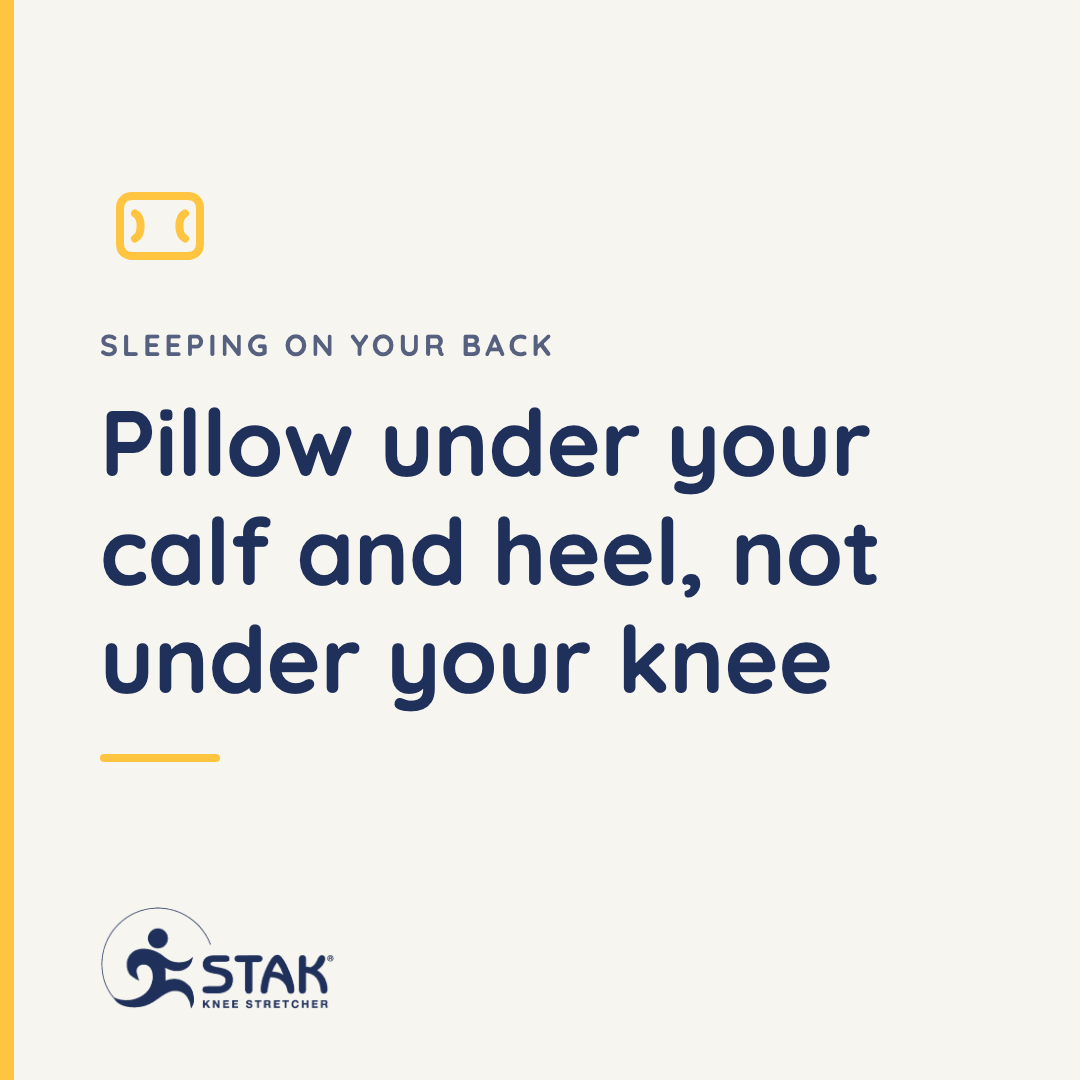
For most people this is the most comfortable and the most helpful position, especially early on. Lie on your back with your leg straight and supported. A pillow under your calf and heel, rather than under your knee, keeps the knee straight and helps with swelling.
Tip: A pillow under the knee can feel more comfortable, but spending long nights with your knee bent can make it harder to get it fully straight. Getting full straightening back is just as important as getting your bend back. Our guide to Knee Flexion vs Extension explains why.
2. On your side, with a pillow between your knees
If you prefer to sleep on your side, it is worth checking with your surgical team which side they advise. Many people find lying on the non-operated side most comfortable, with a pillow between the knees to keep the legs aligned and take pressure off the new knee.
Top 5 Tips for More Comfortable Nights
1. Time your pain relief
Take your prescribed pain relief as directed. If pain regularly wakes you in the night, your pharmacist, GP or surgical team can advise on how to time your doses to help you through it.
2. Settle swelling before bed
A spell of proper elevation and cold therapy in the evening can help your knee settle before you go to bed. Our guide to swelling after knee replacement covers this in more detail.

3. Ease stiffness with gentle movement
A few gentle movements in the evening, such as ankle pumps and thigh tightening, can ease stiffness and help you get comfortable.
- Ankle pumps: point your toes up and down briskly.
- Thigh tightening: press the back of your knee down towards the bed, hold, then relax.
Goal: A relaxed, comfortable knee by the time you settle down for the night.
4. Make night-time trips safe
Getting up in the night is one of the times people are most likely to trip or fall.
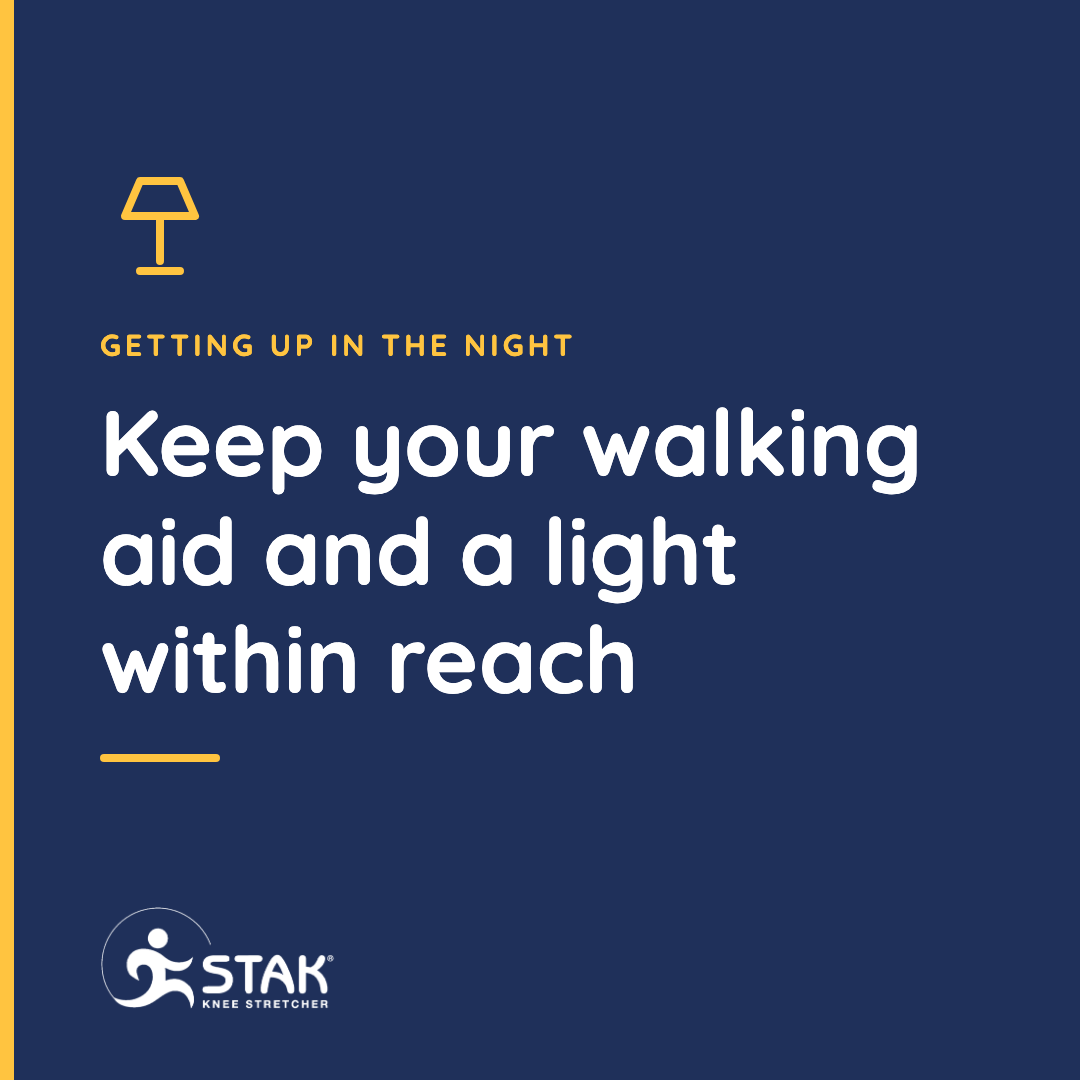
- Keep your walking aid within easy reach of the bed.
- Have a light you can switch on before you stand up.
- Clear the route to the bathroom of rugs, cables and clutter.
- Sit on the edge of the bed for a moment before standing.
5. Keep a regular routine
Going to bed and getting up at similar times, keeping daytime naps short and early, and cutting back on caffeine later in the day can all help your body settle into a better sleep pattern.
Rest, but not too much
Rest is important for healing, but too much of it can leave your knee stiffer and make it harder to sleep at night. Spreading gentle activity, exercises and short walks through the day keeps your knee moving and helps you feel ready for sleep. Long spells in bed or sitting in one position tend to make stiffness worse.
Where the STAK Knee Stretcher fits
Stiffness is one of the things that makes nights uncomfortable. If your knee is slow to bend, regular stretching during the day, guided by your physiotherapist with the STAK Knee Stretcher, is part of keeping it moving. It can help to plan your stretching sessions for earlier in the day, with elevation and cold therapy afterwards, so your knee has settled by bedtime.
When to seek help
Contact your GP, surgical team or NHS 111 if:
- Pain keeps you awake despite taking your pain relief as prescribed
- You notice pain, swelling, warmth or tenderness in your calf
- Your wound becomes red, hot or starts to leak, or you feel feverish or unwell
- Poor sleep is affecting your mood, or you feel low or anxious
Call 999 if you have sudden breathlessness or chest pain. These can be signs of a blood clot and need urgent treatment.
Final Thoughts
Poor sleep after a knee replacement is common and frustrating, but small changes to your position, routine and pain relief can make a real difference. Be kind to yourself on the bad nights: rest when you need to, keep moving during the day, and ask for help if things aren't improving.
If stiffness is keeping you awake, you don't have to manage it on your own. Your physiotherapist is a good first port of call, and we're always happy to talk about your knee.